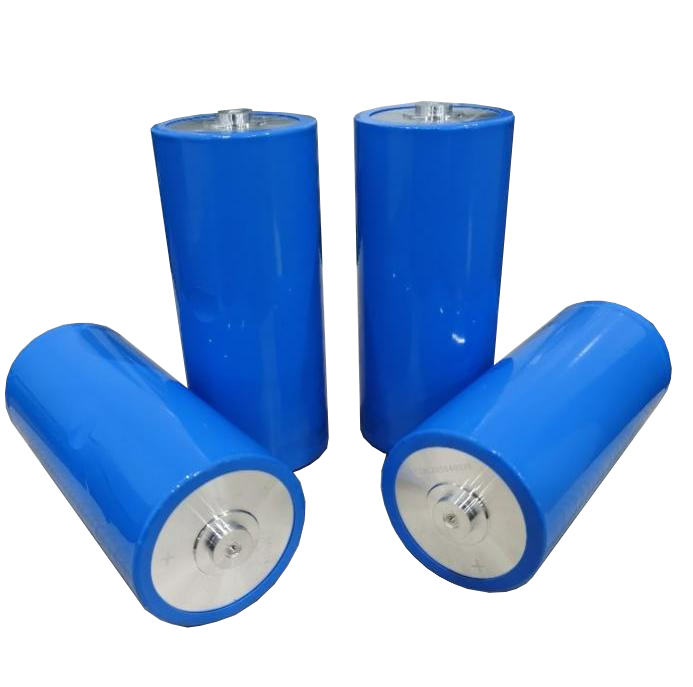


Lithium -ioncondensatorcilinder 15AH CKAA60140
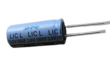
 Jinpei lithium-ioncondensator (Licemen) is een nieuw type opslagapparaat voor elektrische energie dat de kenmerken van lithium-ionbatterijen combineert supercondensatoren. Het heeft de voordelen van een hoge energiedichtheid, hoge vermogensdichtheid, lange levensduur, enz.
Het heeft een breed scala aan toepassingen in elektrische voertuigen, opslag van duurzame energie, industriële en huishoudelijke energieopslagsystemen, evenals elektronische apparaten en consumptiegoederen. Met de voortdurende vooruitgang van de technologie en de verdere verlaging van de kosten, de verwachting is dat de markttoepassing ervan steeds uitgebreider zal zijn.
-
Invoering
Deze specificatie beschrijft de eigenschappen, testmethoden en kennisgeving van de 60140 Flash Charge Lithium-ioncondensatoren ontwikkeld door Jinpei Electronics Co., Ltd.
2. Algemene kenmerken
2.1 Kenmerken en voordelen
- Snel opladen en ontladen
- Lange levensduur
- Goede prestaties bij lage temperaturen
- Hoge energiedichtheid
2.2 Typische toepassingen
Gebruikt bij Energieopslag, Start- en stopsysteem,
slim netwerk, havenmachines UPS en ander energiesysteem.
3. Productuiterlijk & Afmetingen
3.1 Structuur & Verschijning
4. Producttechnische index
4.1Belangrijkste parameters
|
Serie |
Verdiensten |
Waarden |
| 1 | Capaciteit | 15Ah±5% |
| 2 | Was-HI | 4.2V |
| 3 | Was-LO | 2.5V |
| 4 | Interne DC-weerstand (10 ms) | ≤0.6mΩ |
| 5 | Standaard laadstroom | 45A(3C) |
| 6 | Snelle laadstroom | 150A(10C) |
| 7 | Nominale ontlaadstroom | 45A(3C) |
| 8 | Maximale continue ontlaadstroom | 300A(20C) |
| 9 | Maximale continue ontlaadtijd | 90S |
| 10 | Maximale temperatuur neemt toe | 50±5℃ |
|
11 |
Veiligheid |
GB/T 31485-2015《 Veiligheidseisen en test voor elektrische voertuigen
methoden voor macht accu's》 |
| 12 | Aanval&bereik van de afvoertemperatuur | -40~85℃ |
| 13 | Bereik opslagtemperatuur | -40~55℃ |
| 14 | Snelle oplaadcyclus (@25±2℃,
Geforceerde koeling) |
≥30,000 times(5C) |
| 15 | Langzame levensduur van de oplaadcyclus | ≥30,000 times (1C) |
| 16 | Gewicht | ≤850g |
| 17 | Demensie(D× H) | Φ60 mm × 140 mm |
4.2 Other Technical Information
-
Low temperature discharge performance Low temperature discharge curves

discharge current (A)
discharge time Discharge capacitance (mAh)
180 3min58s 11.89 200 3min12s 10.66 225 2min47s 10.44
Test method: at room temperature, 3C constant current charge to 4.2V, constant voltage to 0.05c cutoff, put in the low-temperature -43℃ environment for 3h, discharge to 2.5V cutoff with different current.
Charge/discharge charge/discharge curves

Test method: at room temperature, 3C constant current charge to 4.2V, constant voltage to 0.1c cut-off, use 2min, discharge current 1C to 2.5V cut-off.

Charge/discharge @1000A Discharge curves at large current

Testconditie: 3C charge to 4.2V at normal temperature ,constant voltage to 0.2A cut-off , 1800A charge for 10s,15s interval after charge again,record test datasheet.
5 Testing Methods
5.1 Testing Conditions
This specification followed the standard testing criteria: 1 atm, 25±2 ℃ and a relative humidity < 65%.
5.2 Test for Capacitance/Internal resistance
Capacitance Test: Charge the cell to 4.2V by 1C current and the charge it by constant voltage until the current reached 0.1C. And then, discharge the cell to 2.5V at 1C current. After rested 30s , repeated the last processes and regarded the second capacitance as cell’s capacitance.
Resistance test: Charge the cell to 4.2V by 3C current and charge until 0.1C current by constant voltage, test it’s ACR at 1kHZ Ac impedance meter. By the way, once test its capacitance, recorded its 10ms voltage difference during the discharge process, and the calculated its DCR by R=ΔU/I. Opmerking: the mix record time is 1s during the “Capacitance and resistance test “proces
Test for Low Temperature
Under the ordered temperature, constant charge the cell to 4.2V and then end it at 0.1C by constant voltage. Hierna, remove the cell to different temperature condition (keep 2h) and discharge it to 2.5V at 1C current, record its discharge capacitance.Cycle life test
Under 25±5℃, test the cell’s original performance by “Capacitance/resistance method”, and then charge it to 4.0V by 5C current, discharge it to 2.5V at 2Cconstant current, after this rest 5min, cycle this processes 2000. Regarded the testing process at one cycle, and repeated it 15 keer, until it reached 30000 keer.
6 Notice
6.1 During Operation
- Working temperature of LIB should not exceed the upper and lower limits of the rated
- LIB should be used at rated
Check the polarity of LIB before power on. No reverse connecting.
Keep LIB away from heat. The temperature has a big influence on the working life of LIB(Licemen).
INVOERING
◆CAPACITEITSBEREIK:
1100mAh/2300F, 1500mAh/3100F,1900mAh/4000F, 2500mAh/5200F
◆NOminale spanning: 3.6V
◆Volt-HI:4.2V
◆Volt-LO:2.5V